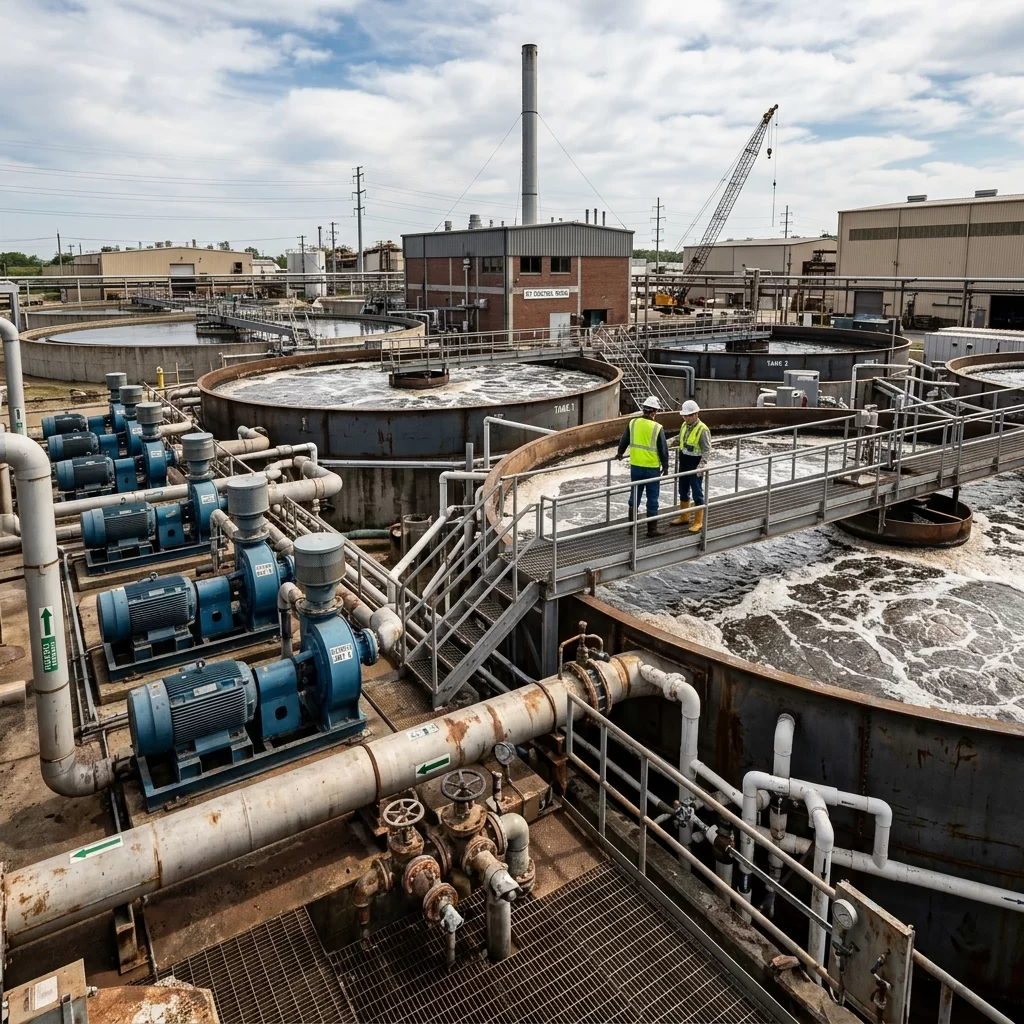
Domestic Wastewater Needs the Right Technology, Not Just Any Tank
Sewage from bathrooms, kitchens and washrooms enters a primary settlement tank where solids and liquid separate, then moves into a biological stage where bacteria break down organic matter before final clarification and discharge or reuse. What differs between sites is not this basic sequence, it is which biological technology fits your space, flow pattern and reuse goals. A residential society with tight plot space needs something different from an institution with predictable daily flow, and both differ from a facility needing a fully prefabricated, fast-deployment solution. Our sewage treatment plant range covers SBR, MBBR, FAB and packaged configurations specifically so the technology gets chosen for your site, not the other way around.
What Makes This Sewage Treatment Plant Worth the Investment
Technology Matched to Your Space
Built for Real Occupancy Patterns
Low Sludge, Low Maintenance Options
Treated Water Ready for Reuse
Fast Deployment Where Timeline Matters
Fully Automated Monitoring
Types of Sewage Treatment Plants We Manufacture
Each STP technology solves a different combination of space, flow variability and budget. We do not push one design across every client, we match the technology to your specific site.
See Full Specifications for Each STP Type
SBR Based Sewage Treatment Plant
Sequencing Batch Reactor treats wastewater in timed batches within a single tank, aeration, settling and discharge cycling through in sequence, well suited to flow that varies through the day rather than arriving at a constant rate. See full specifications for SBR Based Sewage Treatment Plant.
MBBR Based Sewage Treatment Plant
Moving Bed Biofilm Reactor uses floating plastic media carriers that give bacteria far more surface area to grow on than open water alone, delivering reliable treatment in a smaller footprint than conventional activated sludge systems. Explore our MBBR Based Sewage Treatment Plant.
FAB Based Sewage Treatment Plant
Fluidized Aerobic Bio-reactor technology keeps bio-media in constant fluid motion within the aeration tank, handling organic and nitrogenous load in a compact design with comparatively low capital and running cost. View our FAB Based Sewage Treatment Plant.
Package Sewage Treatment Plant
A fully prefabricated, factory-tested unit built for fast deployment, ideal for standalone facilities, smaller residential projects or sites where minimizing onsite construction time matters as much as treatment performance. See our Package Sewage Treatment Plant.
Sewage Treatment Process, Stage by Stage
Screening & Primary Settlement
Incoming sewage passes through screening to remove coarse solids, then settles in a primary tank where heavier solids separate from the liquid stream.
Biological Treatment
Depending on your configuration, aeration and bacterial action, in an SBR batch cycle, on MBBR media, or in a FAB fluidized bed, break down dissolved and suspended organic matter.
Clarification
Treated water separates from remaining biomass, with SBR systems doing this within the same tank through settling, and other configurations using a dedicated clarification stage.
Filtration & Disinfection
A final filtration and chlorination or UV disinfection stage brings water to discharge-ready or reuse-ready quality.
Discharge or Reuse
Treated water is released to compliant discharge, or routed for reuse in flushing, gardening or cooling systems depending on your site's setup.
Which STP Technology Fits Your Site
Residential societies and gated communities generally do well with SBR or MBBR systems sized around morning and evening occupancy surges, since flow through the day is rarely constant. Institutions and commercial buildings with steadier daytime occupancy often suit MBBR for its compact footprint and lower sludge output. Facilities on a tight construction timeline, standalone buildings, smaller projects, or sites needing fast commissioning, are usually better served by a package plant that arrives largely pre-built. Where organic and nitrogenous load runs higher than typical domestic sewage, FAB technology handles that combination in a compact footprint without the higher capital cost of more advanced membrane-based systems.
What Actually Drives the Cost of This System
Capacity is the obvious driver, a 10 KLD society plant and a 500 KLD institutional plant are entirely different investments. Technology choice moves cost too, MBBR systems generally cost more upfront than basic SBR but lower ongoing sludge handling expense over time, while package plants trade some customization for faster deployment and lower installation labor cost. Reuse requirements add cost through additional filtration and disinfection stages, worth factoring in early if flushing or gardening reuse is a goal rather than an afterthought. We size cost around your actual flow pattern and site constraints after an initial assessment, not a flat per-KLD number that ignores what your site actually needs.
Frequently Asked Questions
SBR treats sewage in timed batches within a single tank using gravity settling to separate treated water from sludge, while MBBR uses floating media carriers to give bacteria more surface area, running continuously rather than in batches. MBBR generally needs a smaller footprint and produces less excess sludge, while SBR often costs less upfront.
Yes, package plants are specifically built for this, prefabricated and factory-tested for fast deployment where a fully custom-built plant is not necessary or space for onsite construction is limited.
Yes, with the right filtration and disinfection stage, treated water commonly gets reused for flushing, gardening or cooling tower makeup, cutting freshwater demand. This needs to be planned into the design from the start rather than added on later.
This depends heavily on technology and capacity, MBBR and FAB based systems generally need less space than conventional systems for the same flow, which is often the deciding factor for space-constrained residential or commercial sites.
Yes, every STP comes with an AMC option covering scheduled maintenance, spares and breakdown support, and we also offer O&M packages if your facility would rather have our team operate the plant directly.
Related Engineering Products
Need a Custom Wastewater Plant Recommendation?
Share your raw water laboratory reports and discharge limits with our senior engineering team.