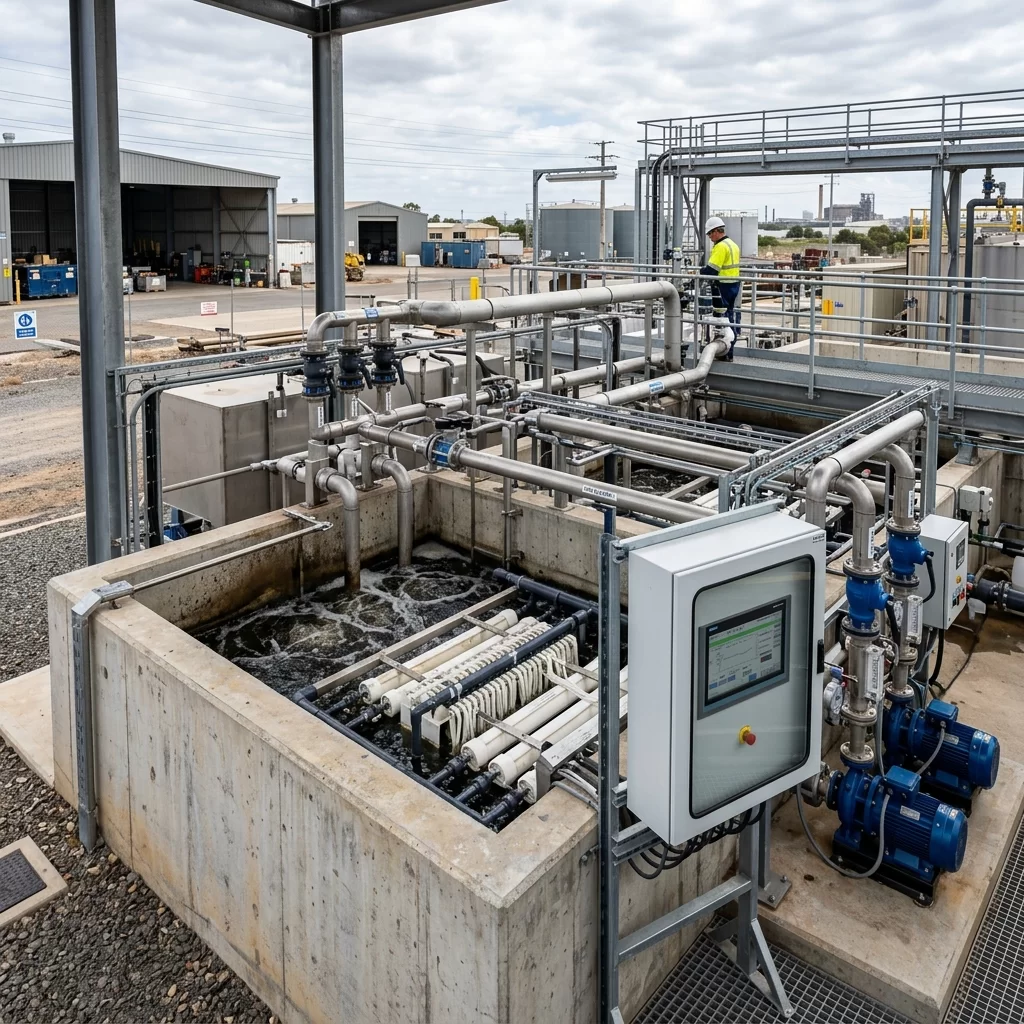
The Membrane Does the Job a Clarifier Used To
A Membrane Bioreactor replaces the secondary clarifier in a conventional biological treatment process with a submerged ultrafiltration membrane, pore sizes typically in the 0.01 to 0.4 micron range, that physically retains solids and microorganisms while permeate passes through as clean, clear effluent. This is a different mechanism than MBBR or SBR, which still rely on gravity settling to separate treated water from biomass, MBR does not settle anything, it filters. The result is effluent quality that gravity-based separation cannot reliably match, along with a smaller footprint since no separate clarifier tank is needed. As a MBR plant manufacturer, we build both hollow fiber and flat sheet membrane configurations, the right choice depends on your scale, load variability and maintenance preferences.
What Makes This System Worth the Investment
No Separate Clarifier Required
Superior Effluent Clarity
Handles Higher Biomass Concentration
Stable Under Variable Load
Reuse-Ready Output Without Additional Tertiary Treatment
Built-In Fouling Control
Types of MBR Systems We Manufacture
Scale and application shape the right configuration, a large industrial facility and a compact institutional site need different approaches to the same core membrane technology.
Talk to Our Design Engineer
Membrane Bioreactor Plant (Industrial)
Full-scale MBR engineered for high-strength industrial effluent or large municipal and institutional flow, combining biological treatment with submerged membrane filtration for consistent, high-clarity output at scale. See full specifications for our Membrane Bioreactor Plant.
Compact / Packaged MBR System
A factory-built, space-efficient MBR unit for sites with limited footprint, hotels, hospitals, institutions and smaller industrial facilities needing high-clarity treatment without a large plot allocation. Explore our Compact MBR System.
How This MBR System Operates
Screening & Equalization
Incoming wastewater is screened for coarse solids and buffered to provide a steady flow into the biological treatment stage.
Biological Treatment
Aeration and biological activity in the bioreactor break down organic load, operating at a higher biomass concentration than conventional activated sludge systems allow.
Submerged Membrane Filtration
Mixed liquor is drawn through submerged ultrafiltration membranes under vacuum, retaining solids and microorganisms while clean permeate passes through as treated effluent.
Fouling Control
Air scouring and periodic backflush or chemical cleaning cycles manage membrane fouling, maintaining consistent permeate flux over time.
Permeate Collection & Discharge or Reuse
Treated permeate, already clear enough for most reuse applications, routes to discharge or directly into reuse systems depending on your setup.
Which MBR System Fits Your Site
Industrial facilities with high-strength effluent or large flow generally need a full-scale membrane bioreactor plant, where handling significant load at consistent clarity matters more than a minimal footprint. Hotels, hospitals, institutions and sites with genuine space constraints typically suit a compact or packaged MBR system, delivering the same core membrane advantage in a factory-built unit that does not demand a large plot allocation. Where reuse is a priority and tertiary treatment would otherwise add cost and complexity, MBR's inherent effluent clarity often makes it the more efficient path to reuse-ready water compared to conventional treatment plus a separate polishing stage.
What Actually Drives the Cost of This System
Membrane area and configuration are the primary cost drivers, hollow fiber membranes generally cost less and pack more surface area into a compact footprint, while flat sheet membranes cost more but offer easier maintenance and lower aeration energy demand. Capacity moves cost proportionally, but MBR's higher biomass concentration means less tank volume is needed than conventional systems for the same load, partially offsetting the membrane cost premium. Membrane replacement is a real ongoing cost to plan for, membranes have a finite operating life and eventual replacement should be factored into your total cost of ownership, not treated as a hidden surprise years in. We size cost around your actual load, reuse goals and site constraints, not a flat rate that ignores what MBR actually saves on tank volume against what it adds in membrane cost.
Frequently Asked Questions
MBBR uses floating carrier media to grow biomass but still requires gravity settling in a clarifier to separate treated water from sludge. MBR replaces that clarifier entirely with membrane filtration, physically retaining biomass rather than relying on settling, which is why MBR typically achieves higher effluent clarity in a smaller footprint.
Often not, membrane-filtered effluent is frequently clear enough for reuse applications directly, since the membrane itself performs a polishing function that conventional secondary treatment does not.
Membrane life depends on operating conditions, fouling control and maintenance quality, we factor expected replacement timelines into your AMC planning so this is budgeted for rather than an unplanned cost.
Hollow fiber typically suits larger installations needing high surface area and flux in a compact space, while flat sheet offers greater mechanical strength and easier maintenance, often preferred for decentralized or modular systems with variable loading. We recommend the right type based on your specific scale and operating conditions.
Yes, as a MBR plant manufacturer in India, we build full-scale membrane bioreactor plants for industrial and large municipal applications, and compact packaged MBR systems for hotels, hospitals and institutions with space constraints, sized to your specific load and site.
Related Engineering Products
Need a Custom Wastewater Plant Recommendation?
Share your raw water laboratory reports and discharge limits with our senior engineering team.