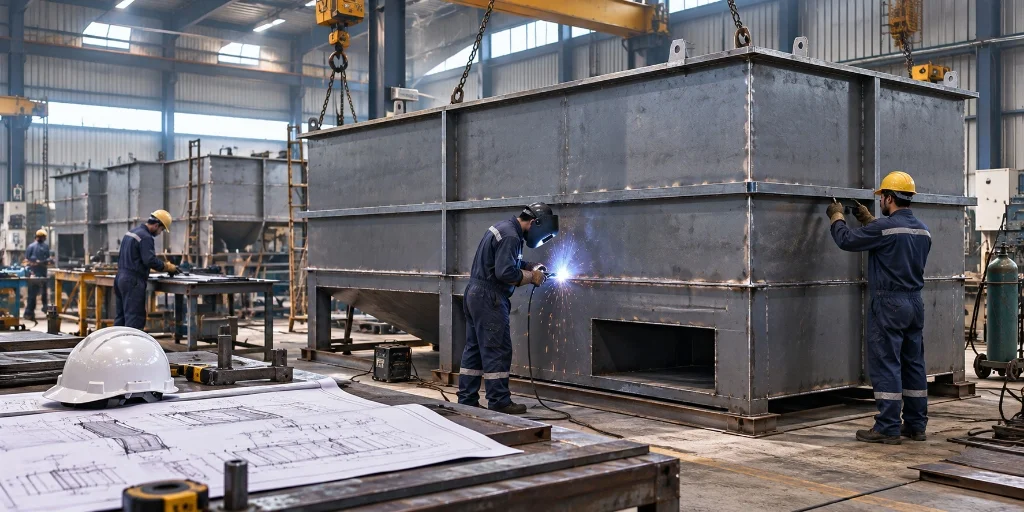
Fabrication starts with material selection matched to what your effluent actually is, FRP with vinyl ester resin for aggressive chemical exposure, SS304 or SS316 where corrosion resistance and structural strength both matter, epoxy-coated mild steel where budget and moderate exposure align. Every tank and reactor is built against the design specifications signed off during engineering, not adjusted on the shop floor because a component was easier to source a different way.
What We Cover in Fabrication & Manufacturing
In-house fabrication across tanks, skids, piping and control systems, built to the specifications your design phase set.
Tank & Vessel Fabrication
Reaction tanks, clarifiers and aeration basins built in the material your effluent chemistry actually calls for.
- FRP tanks with vinyl ester or epoxy resin systems
- SS304 / SS316 fabrication for high-corrosion applications
- Epoxy-coated mild steel for standard exposure conditions
Skid Assembly & Piping
Pre-piped, pre-wired skid units assembled and pressure-tested at our facility before they ever reach your site.
- Factory pre-assembly of skid-mounted systems
- Pressure testing and leak verification
- Piping and instrumentation installed to design spec
Control Panel & Automation Build
PLC and SCADA panels wired and configured in-house, tested before integration with the rest of the plant.
- PLC panel assembly and configuration
- Sensor and instrumentation integration
- Pre-dispatch functional testing
Quality Control & Factory Acceptance Testing
Every unit goes through documented quality checks before it is cleared to leave the facility, not inspected only after a complaint.
- Raw material verification against specification
- Weld and lamination quality inspection
- Factory Acceptance Testing (FAT) before dispatch
Execution Process for Fabrication & Manufacturing
From approved drawing to dispatch-ready equipment.
Material Procurement & Verification
Raw material, resin grade for FRP, steel grade for SS or MS components, gets sourced and verified against the specification the design phase set, before fabrication begins.
Tank & Component Fabrication
Plate rolling, welding or lamination work proceeds against approved drawings, with in-process checks at each stage rather than a single inspection at the end.
Skid Assembly & Piping Integration
Fabricated components come together into pre-piped, pre-wired skid units, minimizing what needs to happen on your site later.
Quality Control Inspection
Weld integrity, lamination quality and dimensional accuracy get checked against specification before any unit moves to testing.
Factory Acceptance Testing
Pressure testing, functional testing of control panels and pump operation confirm the unit performs correctly before it ever leaves the facility.
Dispatch to Site
Cleared units are packed and dispatched, coordinated with your site's civil readiness so installation can begin without delay.
Key Benefits & Output Standards
Consistency that only comes from keeping fabrication in-house.
Material Matched to Your Actual Effluent Chemistry
Documented Quality Control at Every Fabrication Stage
Factory Acceptance Testing Before Dispatch
Fewer Site Surprises Since Assembly Happens Under Controlled Conditions
Direct Accountability, No Third-Party Fabricator to Chase
Sectors Benefiting from Fabrication & Manufacturing
Material and construction choices change meaningfully depending on what the equipment will actually handle.
Tanks built to withstand the specific dye chemistry and pH swings a Textile & Dyeing Effluent Treatment Plant deals with batch to batch.
Equipment fabricated for aggressive solvents and variable pH, where a Chemical Industry Effluent Treatment Plant or Pharmaceutical Effluent Treatment Plant cannot compromise on material resistance.
Corrosion-resistant construction suited to the organic acids and cleaning chemicals typical of a Food & Beverage Effluent Treatment Plant.
Compact, factory-assembled skids for Sewage Treatment Plant installations where onsite fabrication space and time are both limited.
FAQs regarding Fabrication & Manufacturing
Common questions about materials, quality control and timelines.
Ready to move from design to fabrication?
Talk to our team about material selection, timelines and what your project needs to go from drawing to built equipment.