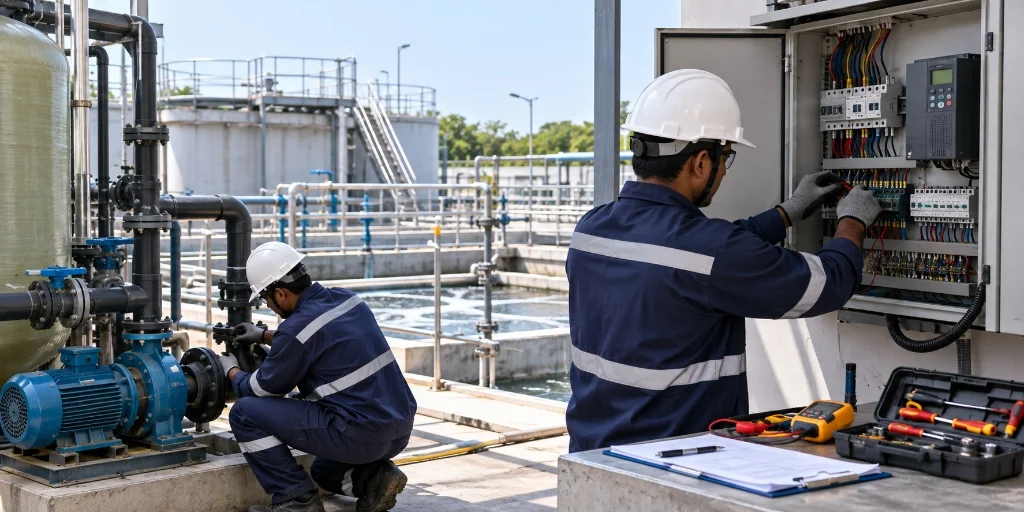
Installation begins only once civil work is cured and mechanical components, pumps, blowers, diffusers, are ready for connection. Our team handles site erection, piping and electrical integration, then moves through a structured commissioning sequence, clean water leak testing first, cold commissioning of electrical and mechanical systems next, and only then live operation with actual wastewater and biological seeding. Rushing this sequence is the single most common reason new plants underperform in their first few months.
What We Cover in Installation & Commissioning
From site erection through to a plant proven to perform under real load.
Site Erection & Piping
Mechanical installation of tanks, pumps, blowers and diffusers, with piping and civil integration executed against the approved design.
- Tank and equipment positioning per layout drawings
- Piping installation and connection
- Electrical and instrumentation termination
Leak Testing & Cold Commissioning
Clean water testing proves the civil and mechanical work is sound before anything biological gets introduced.
- Clean water leak test, typically held 24 to 72 hours per tank
- Cold commissioning of electrical systems, valves and pumps without water
- Alarm and emergency stop function verification
Hot Commissioning & Biological Seeding
The plant moves to live operation gradually, seeding and building the biological culture rather than loading it all at once.
- Hot commissioning with clean water before real wastewater
- Biological culture seeding and gradual load introduction
- Process parameter monitoring and adjustment
Trial Run & Performance Validation
A sustained trial run confirms the plant meets discharge norms consistently under real operating conditions, not just on a good day.
- 72-hour continuous performance trial run
- Outlet parameter testing against CPCB / SPCB norms
- Performance report generation
Documentation & Operator Handover
Complete documentation and hands-on training so your team can actually run the plant, not just receive it.
- Commissioning report and compliance documentation
- Operator training on process and equipment
- Operations and maintenance manual handover
Execution Process for Installation & Commissioning
A sequence that does not skip steps, because each one protects the next.
Site Readiness Verification
We confirm civil work is cured and mechanical installation points are ready before equipment arrives, avoiding delays from a site that is not actually prepared.
Mechanical & Electrical Installation
Tanks, pumps, blowers and piping get installed per the approved layout, with electrical and instrumentation terminated and tested.
Clean Water Leak Testing
Each tank is filled with clean water and held, typically 24 to 72 hours, checking for level drop or damp patches, proof that the civil and mechanical work is watertight before anything else proceeds.
Cold Commissioning
Electrical systems, valves and pumps get tested without water, confirming switches, alarms and emergency stops function correctly.
Hot Commissioning & Biological Seeding
The plant runs on clean water first, then real wastewater, with biological culture seeded and fed gradually, this cannot be rushed without risking the culture's stability.
Trial Run & Handover
A 72-hour continuous trial run confirms consistent performance against discharge norms, followed by documentation, operator training and formal handover.
Key Benefits & Output Standards
Commissioning done right the first time, not fixed after complaints start.
Leak Testing Before Anything Biological Begins
Biological Culture Seeded Gradually, Not Rushed
72-Hour Continuous Trial Run Before Handover
Operator Training Included, Not a Separate Cost
Compliance Documentation Ready From Day One
Sectors Benefiting from Installation & Commissioning
Commissioning complexity changes by plant type and site condition.
Careful biological seeding matters more where a Textile & Dyeing Effluent Treatment Plant relies on a biological polishing stage after chemical color removal.
Commissioning sequences that account for advanced oxidation and sensitive biological stages, relevant for Pharmaceutical Effluent Treatment Plant and Chemical Industry Effluent Treatment Plant installations.
Space-constrained commissioning for Sewage Treatment Plant and Compact MBR System installations, often in basement or rooftop plant rooms with limited access.
Phased commissioning for CETP projects, where multiple member units connect to shared infrastructure on different timelines.
FAQs regarding Installation & Commissioning
Common questions about timelines, testing and handover.
Ready to move from fabricated equipment to a running plant?
Talk to our team about your site readiness and commissioning timeline.