Where Discharge Stops Being an Option
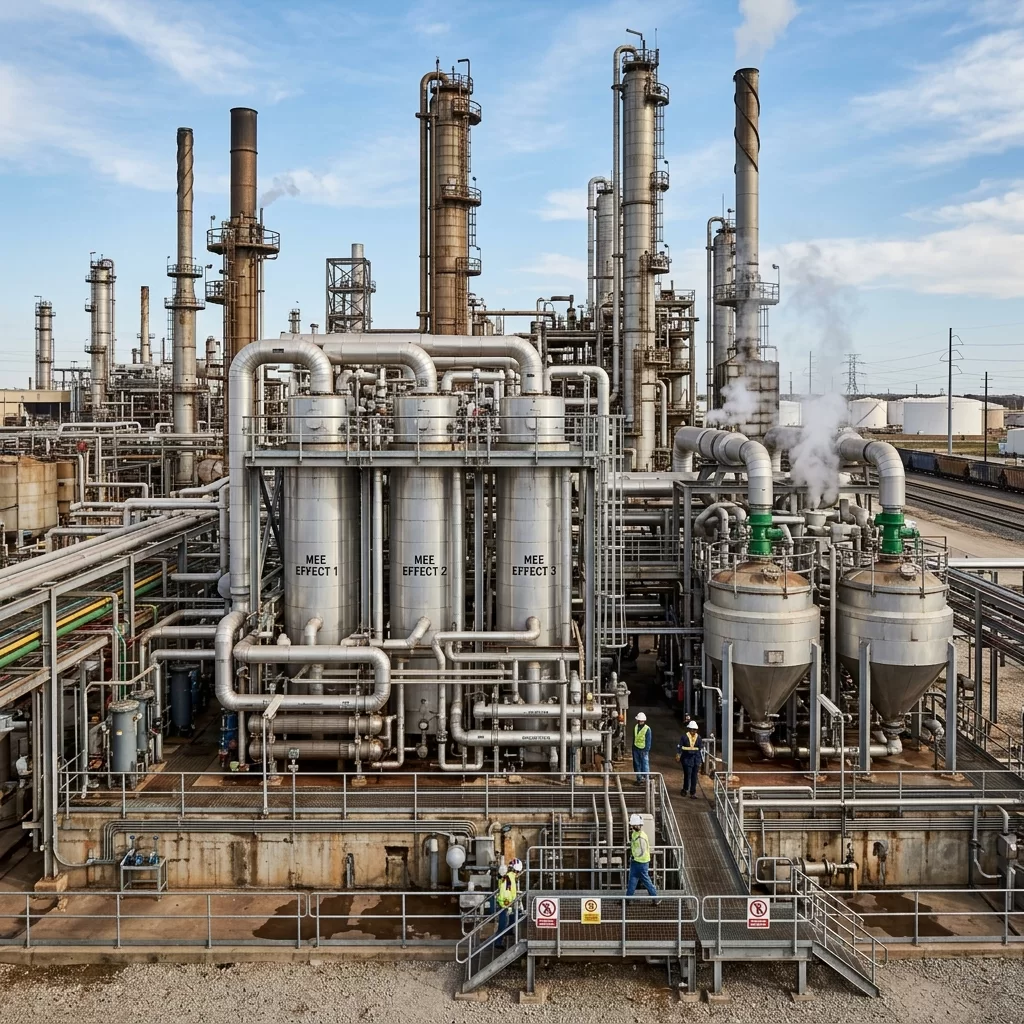
Zero Liquid Discharge is not a treatment stage you add to an existing plant, it is a complete system built to eliminate liquid effluent entirely, RO reduces the bulk volume and recovers permeate for reuse, a Multiple Effect Evaporator concentrates what the RO stage rejects using staged steam energy, and an Agitated Thin Film Dryer converts that concentrate into dry, crystallized solids fit for disposal or, in some cases, recovery. As a Zero Liquid Discharge system manufacturer, we design this train around your effluent's specific TDS and COD profile, since the technology mix, MEE alone, MEE with MVR for energy efficiency, or MEE paired with a crystallizer, changes considerably depending on what your effluent actually contains.
What Makes This System Worth the Investment
Genuinely Zero Liquid Discharge
Recovers Up to 99% of Water
Dramatically Reduced Solid Waste Volume
Energy-Efficient Evaporation Options
Meets the Strictest Regulatory Standard
Salt and Solid Recovery Where Viable
ZLD Systems Sized to Your Effluent and Energy Priorities
Effluent TDS level, COD strength and your priority between capital cost and ongoing energy cost all shape which technology combination fits best.
Standard RO-MEE-ATFD System
The conventional ZLD train, RO for bulk recovery, MEE for concentration, ATFD for final solid conversion, suited to moderate-TDS effluent where a proven, well-established technology combination is the priority.
MVR-Integrated System for Lower Energy Cost
Mechanical Vapor Recompression replaces or supplements conventional MEE, cutting steam and energy consumption meaningfully over the system's operating life, a stronger fit where high energy tariffs make lifetime operating cost the bigger concern.
High-TDS System With Crystallizer Integration
For effluent with very high dissolved solids or where salt recovery has genuine value, a crystallizer stage added to the evaporation train enables cleaner salt separation than ATFD alone typically achieves.
How This ZLD System Operates
Pre-Treatment
Sand and carbon filtration, softening and ultrafiltration remove suspended solids, hardness and organic impurities, protecting the RO membranes that follow.
Reverse Osmosis
RO reduces TDS and dissolved impurities, producing permeate for reuse while sending the concentrated reject stream forward for evaporation.
Multiple Effect Evaporation
The MEE stage concentrates RO reject using staged, low-pressure steam, extracting further water and reducing volume considerably before final drying.
Agitated Thin Film Drying
ATFD converts the concentrated slurry from evaporation into dry, crystallized solid salts, ready for disposal or, where composition allows, recovery.
Sludge and Solid Handling
Recovered solids are dewatered and handled per your site's disposal classification, with volume dramatically reduced compared to what conventional treatment alone would generate.
Where This Fits Your Industry
Textile and dyeing units, particularly those above the CPCB-mandated discharge threshold, form one of the largest ZLD application segments, given the high TDS and color load typical of this effluent. See how this connects with our Textile & Dyeing Effluent Treatment Plant for the treatment stages that typically feed into a ZLD system. Chemical and pharmaceutical manufacturers use ZLD both for regulatory compliance and to safely recover treated water while managing hazardous waste streams responsibly, our Chemical Industry Effluent Treatment Plant and Pharmaceutical Effluent Treatment Plant pages cover the upstream treatment these sectors typically need first. Power plants apply ZLD to manage high-salinity effluent and scaling risk, paper and pulp facilities to handle wastewater carrying high organic load and solids, and electroplating operations wherever heavy metal-bearing effluent makes discharge a genuine liability rather than a routine compliance task. Facilities in critically polluted industrial zones, Delhi NCR, parts of Haryana and Rajasthan among them, increasingly face ZLD as a regulatory requirement rather than a voluntary sustainability choice.
What Actually Drives the Cost of This System
Effluent TDS and COD strength are the primary cost drivers, higher dissolved solids demand more evaporation capacity, and evaporation is consistently the most capital and energy-intensive stage in a ZLD train. Technology choice moves cost significantly too, MVR-based systems cost more upfront than conventional MEE but reduce ongoing energy expense, the right choice depends on whether your priority is capital cost or lifetime operating cost. Whether a crystallizer is justified depends on effluent composition and whether recovered salts have genuine reuse value at your site, an added stage only worth the investment where the numbers support it. We size cost around your actual effluent characterization and energy cost priorities, not a flat industrial rate that ignores what your specific effluent and utility costs actually require.
Frequently Asked Questions
ZLD has been mandated since 2015 for textile, tannery, distillery and pulp and paper industries, with textile units discharging above 25 KLD specifically required to implement it. The mandate has since extended to pharmaceutical API plants, textile units in critically polluted zones and certain chemical manufacturers. Confirm your specific requirement with your state pollution control board if you are unsure.
Well-designed ZLD systems recover 95 to 99 percent of processed wastewater as reusable permeate, the exact figure depends on your effluent's specific TDS and composition, which we assess during characterization.
Final output is dry, crystallized solid salt, dramatically reduced in volume compared to what conventional treatment would send to landfill, in some cases up to 100 times less. Depending on composition, this material may qualify for disposal or, in certain cases, recovery and reuse.
MVR generally reduces steam and energy consumption compared to conventional MEE, making it a stronger fit where energy cost is a major ongoing concern. The right choice depends on your effluent volume, TDS level and whether upfront capital cost or lifetime operating cost is the bigger priority for your facility.
Yes, ZLD systems are commonly integrated downstream of an existing Effluent Treatment Plant, taking the RO reject or concentrated effluent your current plant already produces and carrying it through evaporation and drying to achieve true zero discharge, without necessarily requiring a rebuild of your existing treatment infrastructure.
Related Engineering Products
Need a Custom Wastewater Plant Recommendation?
Share your raw water laboratory reports and discharge limits with our senior engineering team.