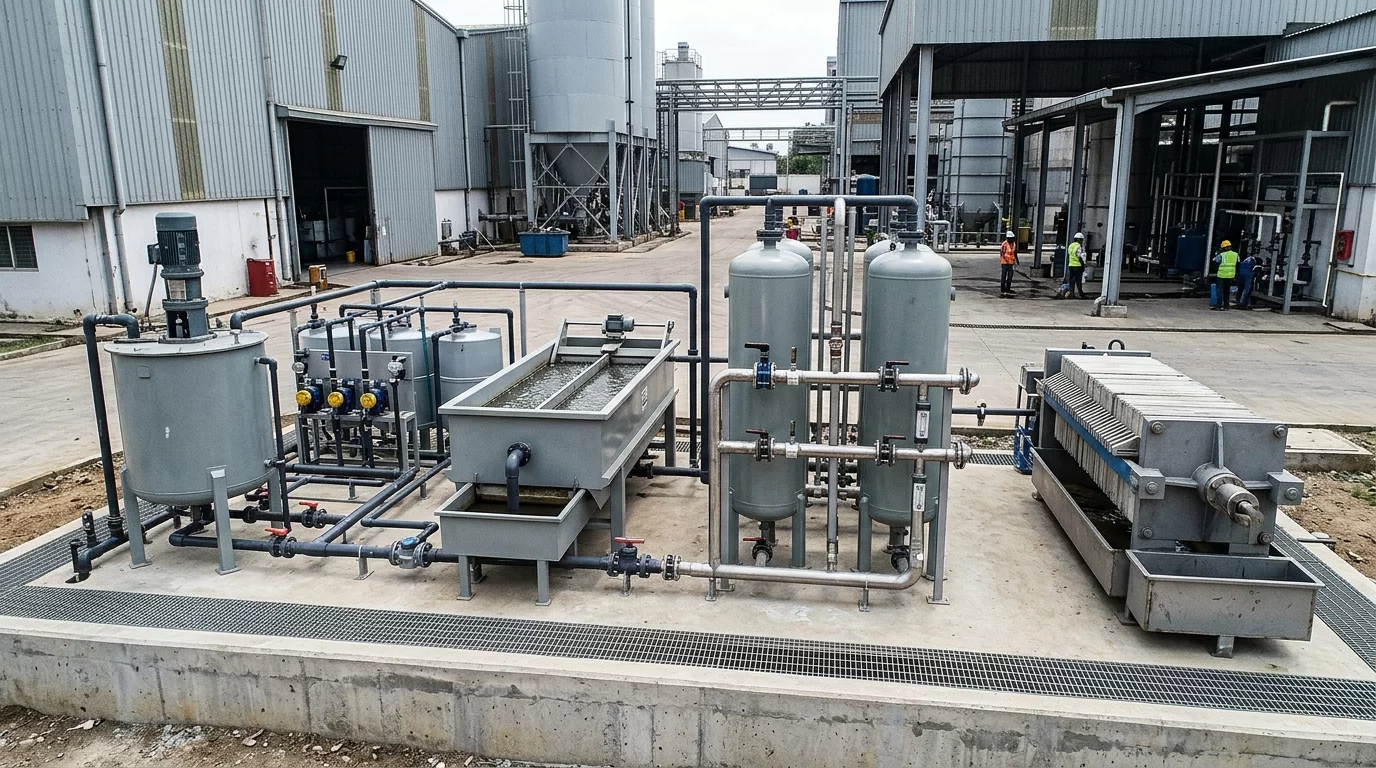
Engineering Built Around Your Effluent, Not a Catalogue Number
No two industrial effluents behave the same way, even within the same sector. A dyeing unit's discharge and a food processing plant's wastewater differ in BOD, COD, TSS and pH by a wide margin, and treating them the same way is how underperforming plants get built. Every ETP we manufacture starts with lab testing of your actual effluent, then gets engineered as a specific combination of physico-chemical and biological treatment stages sized to that data. This is the difference between a plant that clears CPCB and SPCB norms on paper and one that clears them consistently, month after month, under real operating load.
Request a Site Assessment
Key Benefits of Effluent Treatment Plant Manufacturer in India
SPCB / CPCB Outlet PCB Norm Compliance
Lower Operating Cost Over Time
Built for Water Recovery, Not Just Disposal
Compact, Factory-Built Skid Design
Fully Automated Monitoring
Construction That Survives Harsh Effluent
Types of Effluent Treatment Plants We Manufacture
As an effluent treatment plant manufacturer working across sectors, we do not sell one design and adjust the tank size. Each configuration below exists because a specific effluent profile demanded it.
Physico-Chemical Effluent Treatment Plant
Coagulation, flocculation and sedimentation remove suspended solids, oils and certain dissolved chemicals, either as pre-treatment ahead of biological stages or as a standalone solution where biological load is minimal. See full specifications for Physico-Chemical Effluent Treatment Plant.
Biological Effluent Treatment Plant
Aerobic and anaerobic microbial processes break down organic load in this treatment configuration, suited where BOD and COD run high without heavy chemical or metal content that would demand physico-chemical treatment first. Explore our Biological Effluent Treatment Plant.
Textile & Dyeing Effluent Treatment Plant
Built for high-color, high-COD wastewater from dyeing and printing units, this setup pairs coagulation-based color removal with biological treatment to meet textile-sector specific limits. See our Textile & Dyeing Effluent Treatment Plant in detail, or explore our full Textile & Dyeing industry solutions.
Chemical Industry Effluent Treatment Plant
Engineered for variable-composition, often multi-stage process effluent, using flexible physico-chemical and biological combinations that adapt to shifting chemical loads batch to batch. View our Chemical Industry Effluent Treatment Plant.
Pharmaceutical Effluent Treatment Plant
Built for effluent carrying antibiotics and API residues with high COD, this configuration typically requires advanced oxidation ahead of biological treatment to break down compounds that resist conventional processes. See our Pharmaceutical Effluent Treatment Plant in detail, or browse our Pharmaceutical industry solutions.
Food & Beverage Effluent Treatment Plant
Configured for high-BOD organic load from processing units, this system uses anaerobic pre-treatment to cut organic load before aerobic polishing, keeping operating costs lower than pure aerobic treatment alone. See our Food & Beverage Effluent Treatment Plant in detail, or browse our Food & Beverage industry solutions.
Oil Water Separator (OWS)
A pre-treatment stage for effluent carrying free oil and grease, common in automotive workshops and select food processing lines, protecting downstream biological treatment from fouling or overload. View our Oil Water Separator specifications.
Effluent Treatment Plant Process, Stage by Stage
Equalization & Screening
Raw effluent passes through bar screens to remove coarse solids, then sits in an equalization tank that buffers flow spikes so downstream stages get a steady, predictable load.
Physico-Chemical or Biological Treatment
Depending on effluent profile, water moves through coagulation and flocculation to strip suspended solids and chemicals, biological treatment to break down organic load, or both in sequence.
Clarification & Filtration
Settled sludge separates in clarifiers while remaining suspended matter is polished through sand or activated carbon filtration.
Disinfection & Discharge or Reuse
A final UV or ozonation stage brings water to discharge-ready or reuse-ready quality, ready for compliant release or return into your operations.
What Actually Drives Effluent Treatment Plant Cost
Effluent treatment plant cost in India is not a flat per-KLD number, whatever a quick online search suggests. Capacity is the obvious driver, a 50 KLD plant and a 500 KLD plant are different investments entirely. Effluent characteristics matter just as much, high-TDS or high-COD wastewater typically needs additional treatment stages that a low-strength effluent does not, and that shows up in both capital cost and ongoing chemical consumption.
Construction material moves the number too. FRP tanks cost less upfront than SS304 or SS316, but will not survive every corrosive effluent, so material choice follows what is actually flowing through the plant, not budget preference alone. Automation level matters as well, a fully automatic PLC-controlled plant costs more initially than a manual one, but typically earns that difference back within a few years through lower staffing and fewer operational errors.
We do not quote a generic per-KLD price that falls apart the moment your actual effluent report arrives. Cost gets sized around your specific flow, load and material requirement after an initial site assessment, an honest number instead of a placeholder figure.
Which ETP Configuration Fits Your Industry
Effluent treatment does not transfer cleanly across sectors. A textile unit’s high-color, high-COD discharge needs a different sequence than a pharmaceutical plant’s antibiotic-laden effluent, and both differ entirely from an automotive workshop’s oily wastewater. The seven configurations above exist because a generic plant kept failing to handle one effluent profile or another.
If you are unsure which configuration applies to your operation, that is expected, most buyers are not expected to know their own effluent chemistry in detail going in. Our process starts with an effluent characterization study before we recommend a specific ETP type, removing the guesswork and avoiding the common, expensive mistake of buying a plant sized for the wrong problem.
See how this plays out by sector: Textile & Dyeing wastewater treatment, Pharmaceutical effluent treatment, Food & Beverage effluent treatment.
Frequently Asked Questions
Skid-mounted plants are fabricated at our facility within 2 to 4 weeks. Onsite civil integration and final commissioning typically take another 7 to 14 days depending on plant capacity.
We provide the technical documentation and plant specifications typically required for SPCB consent applications. The application itself is filed by the client, but we support with whatever design or performance data is needed.
Every plant comes with an AMC option covering scheduled visits, spares and breakdown support, and we also offer O&M packages if you would rather have our team run the plant directly.
That depends on your specific effluent profile, textile, chemical, pharmaceutical and food processing units each need a different treatment combination, which is why we design around your effluent characteristics rather than offering one fixed configuration for every industry.
Cost depends on capacity, effluent strength, construction material and automation level, there is no reliable flat rate. We provide a firm estimate after reviewing your effluent characterization report and site conditions.
Related Engineering Products
Need a Custom Wastewater Plant Recommendation?
Share your raw water laboratory reports and discharge limits with our senior engineering team.